Canvas is the most forgiving material to wear. It is the least forgiving to clean wrong.
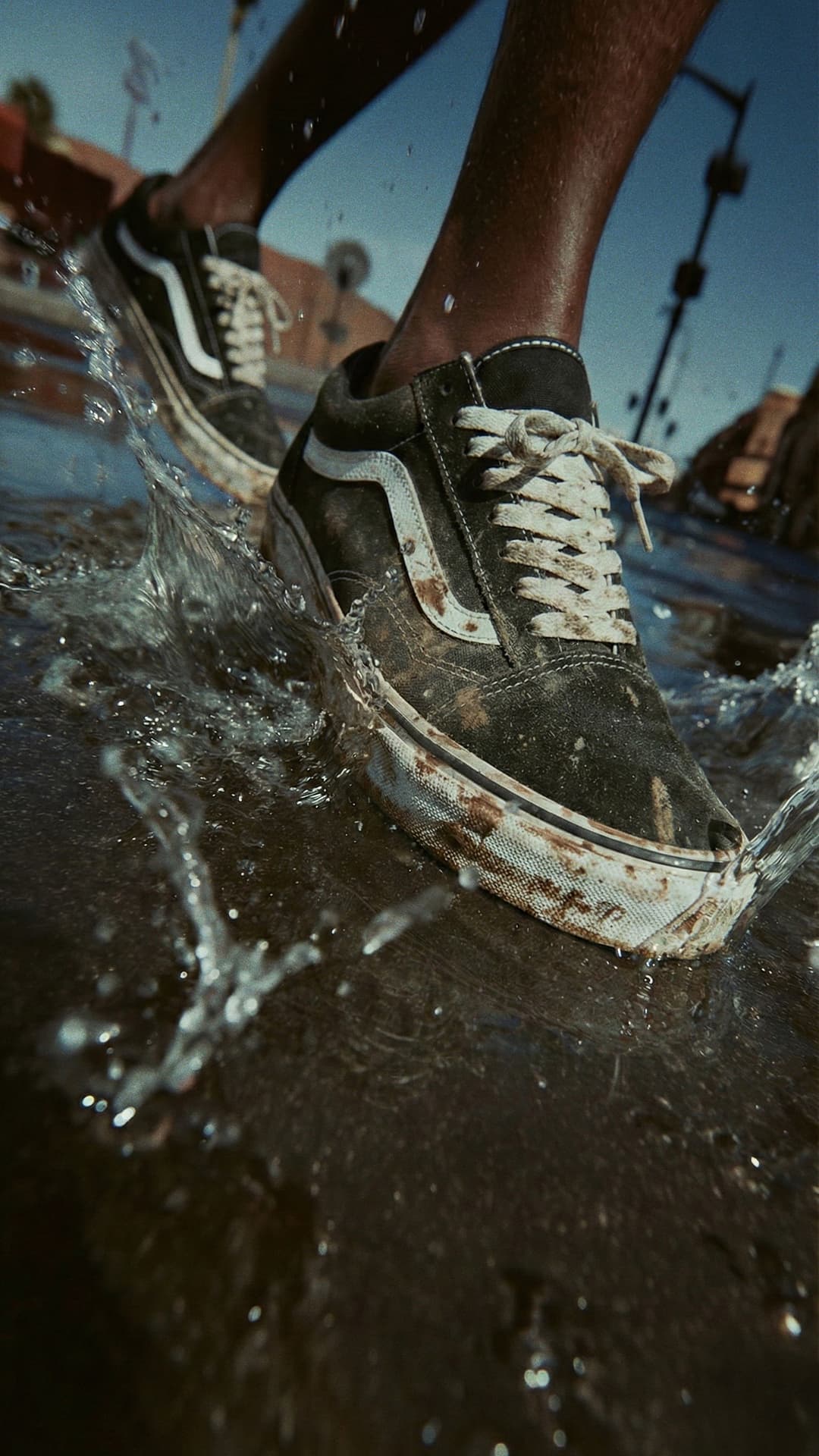
A white Converse Chuck Taylor will pick up grass, coffee, and scuff marks within a single afternoon. That's just the nature of canvas. The weave is open, the fibers are absorbent, and anything wet that touches them goes deep fast. Most people reach for whatever cleaner is under the sink and scrub hard. That's exactly how you get streaks, yellowed fabric, and warped rubber sidewalls.
We've cleaned thousands of canvas pairs at Shoozas. The material looks simple. The cleaning process is not.
The Problem with Canvas
Canvas is woven cotton, sometimes with synthetic blends. It absorbs liquid almost instantly, which means a stain that sits for 48 hours isn't sitting on the surface anymore. It's bonded into the fiber. That same absorbency means if you apply too much solution, or the wrong solution, it spreads the stain outward before lifting it. You end up with a larger, more diffuse mark than you started with.
Heat makes it worse. Anyone who's thrown a pair of Vans or Chucks in the dryer knows the result: shrinkage, warping, and that specific smell that tells you something went wrong. Canvas also doesn't respond well to bleach, even when the sneaker is white. Bleach oxidizes the fiber and causes yellowing over time, the opposite of what you want.
Over-the-counter cleaning kits and generic household products treat canvas like any other fabric. It isn't.
How We Clean Canvas at Shoozas
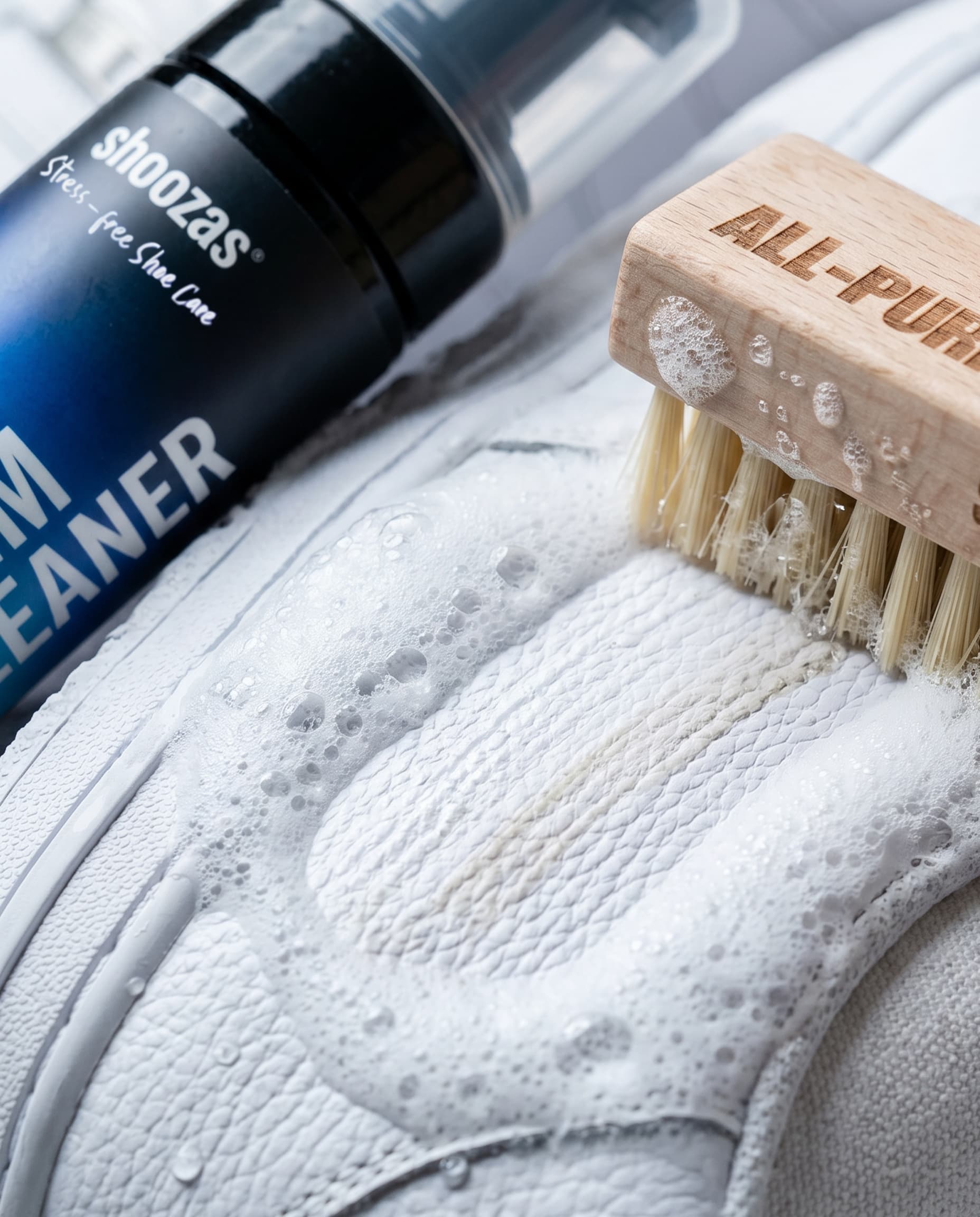
When a canvas pair comes into the studio, we start dry. That's the first rule. Before any solution touches the upper, we brush out loose dirt with a soft bristle brush. Skipping this step is what causes most DIY streaking. You're not lifting dirt out of the weave, you're pushing wet dirt deeper in.
From there, we work in sections with a controlled amount of solution, using circular motions and minimal saturation. Canvas needs to be damp, not soaked. We pay specific attention to the toe box and foxing tape, where dirt collects at the seam between canvas and rubber. That seam traps grime and is usually the hardest area to clean without oversaturating the upper.
On white canvas, we treat the rubber sidewalls separately. The rubber and the fabric need different approaches, and mixing them up is a common mistake we see from pairs that come in after a DIY attempt.
Drying matters as much as cleaning. We air dry every canvas pair in a controlled environment, stuffed to hold shape. No heat. No direct sun. Both cause yellowing on white canvas and can shift the silhouette on structured pairs like high tops.
What Cleaning Can and Can't Do
Cleaning removes surface dirt, staining, and odor from canvas uppers. For most pairs, that's enough to make them genuinely wearable again.
What cleaning won't do: reverse deep yellowing from UV exposure or bleach damage. If white canvas has turned that particular shade of cream-yellow after years in sunlight or a bad DIY attempt with bleach, that's fiber-level damage. No cleaning process brings it back. We'll always be straight with you if a pair comes in with that kind of damage. We'd rather tell you the truth upfront than send back a pair you're disappointed in.
Ink stains are also worth flagging. Some inks bond to cotton fibers permanently. We can reduce visibility significantly, but a ballpoint pen mark on white canvas is not always fully removable. We'll tell you what to expect before we start.
Ready to Send Your Canvas Pair In?
If your Chucks, Vans, or any other canvas pair have been sitting unworn because they look rough, send them to us. We'll clean them properly, handle the shipping both ways, and keep you updated every step of the process. No guesswork, no DIY risk.