Not all stains are equal
Spill coffee on your Air Forces. Slide into a base in your New Balances. Catch a drip of chain oil on your Dunks. Three stains. Three completely different problems. The mistake most people make is treating them all the same way.
We see these three at Shoozas Studio constantly. Here is what actually separates them.
Coffee: the clock is working against you
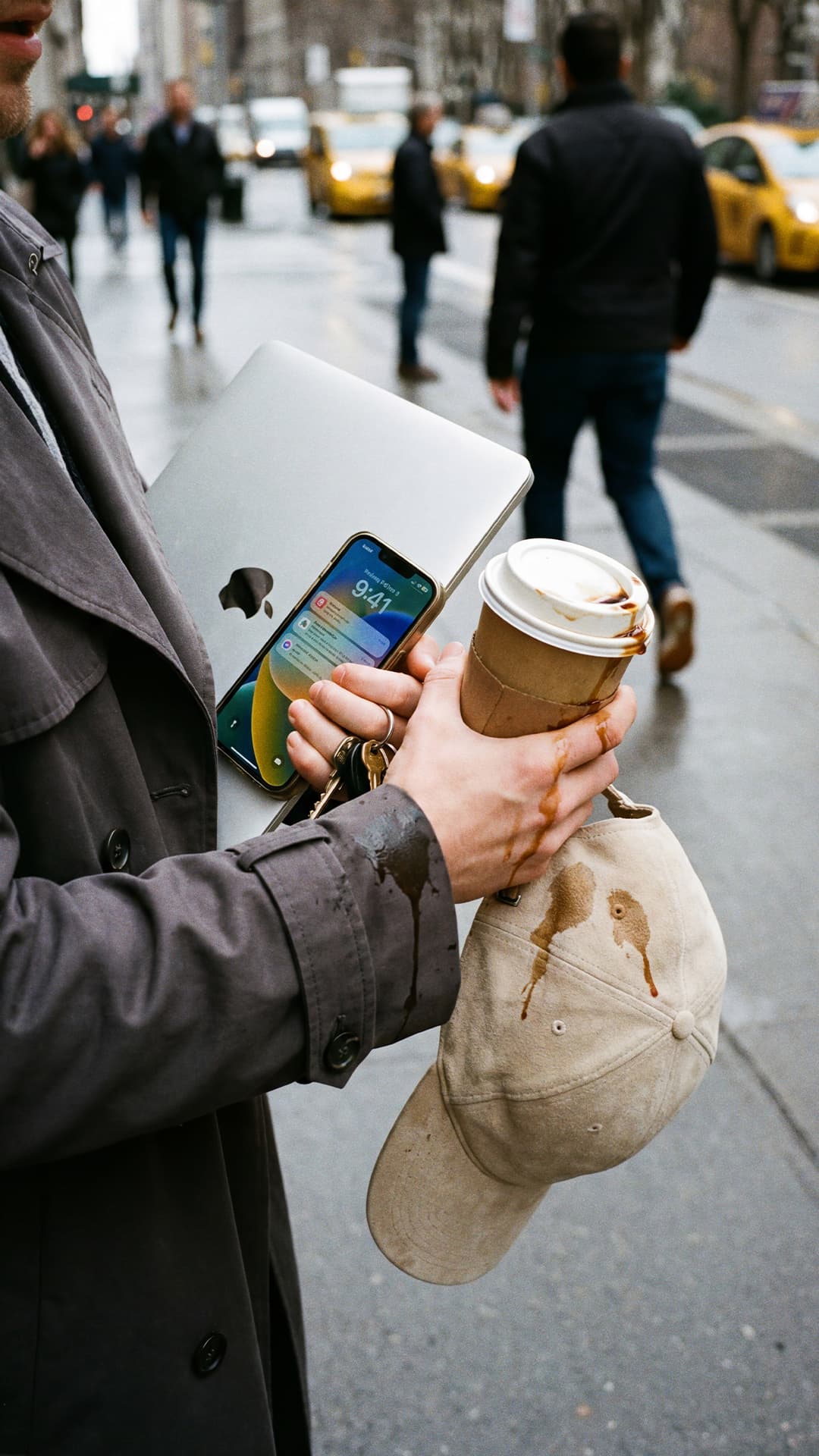
Coffee is a tannin stain. Tannins bind to fabric fast, especially on mesh and canvas uppers. The fresher the stain, the better your odds.
Blot it immediately. Do not rub. Rubbing spreads the tannin into more fibers and pushes it deeper into the weave. A clean cloth and cold water, blotted gently, buys you time before a proper cleaning.
On white mesh like an Air Max or an ultraboost, dried coffee turns amber. On darker uppers it hides better, but it is still there and it still sets harder over time. When pairs come to us with a week-old coffee stain, we can usually get it out, but fresh ones are easier.
The single biggest factor with coffee? Time. Every hour it sits, it gets harder to lift.
Grass: it is not what you think it is
People assume grass stains are just dirt. They are not. Grass stains are a combination of chlorophyll, protein, and organic pigment. That mix bonds to fabric differently than soil does, and it responds poorly to heat or generic cleaners that were not designed for it.
Grass stains show up most on toe boxes and midsole edges. Common culprits: Jordans on a soccer field, Yeezys at a backyard cookout, white leather Nikes at youth sports. The green gets into the texture of the material and sits there.
On leather and synthetic uppers, grass usually comes off cleanly with the right process. On canvas or mesh, the pigment can grip more stubbornly. We always pre-treat and let the product dwell before any agitation. Rushing this step is what causes partial removal and uneven results.
Oil and grease: the hardest one
Chain oil, cooking grease, motor oil — these penetrate materials in a way that water-based stains do not. Oil repels water. Trying to clean it with a damp cloth usually spreads it. You end up with a larger, thinner stain instead of a smaller concentrated one.
On suede and nubuck, oil is the worst-case scenario. It darkens the nap immediately and can be very difficult to fully lift once it has set. On smooth leather or rubber, there is more hope. On mesh, it depends heavily on how long it has been sitting.
When we receive oil-stained pairs, we treat the material type before anything else. The process for oily suede is completely different from oily mesh. There is no universal answer.
What cleaning can and can't do
We will be straight with you. Cleaning can remove surface staining, lift pigment from fabric, break down oil residue, and refresh the overall appearance of a pair. It cannot reverse permanent dye transfer, fix fabric that has been bleached by DIY attempts, or undo damage caused by the wrong cleaner applied at home. If a stain has been scrubbed aggressively with the wrong product before it reaches us, we are working around that too. The best thing you can do with a fresh stain is the least amount possible before a professional handles it.
Send us the pair
If you are sitting on a stained pair and wondering whether it is too far gone, it probably is not. We handle all three of these stains regularly, and most of them come out well when the material is right and the stain has not been over-treated.
Ship us your pair and we will take it from there. Start your order →