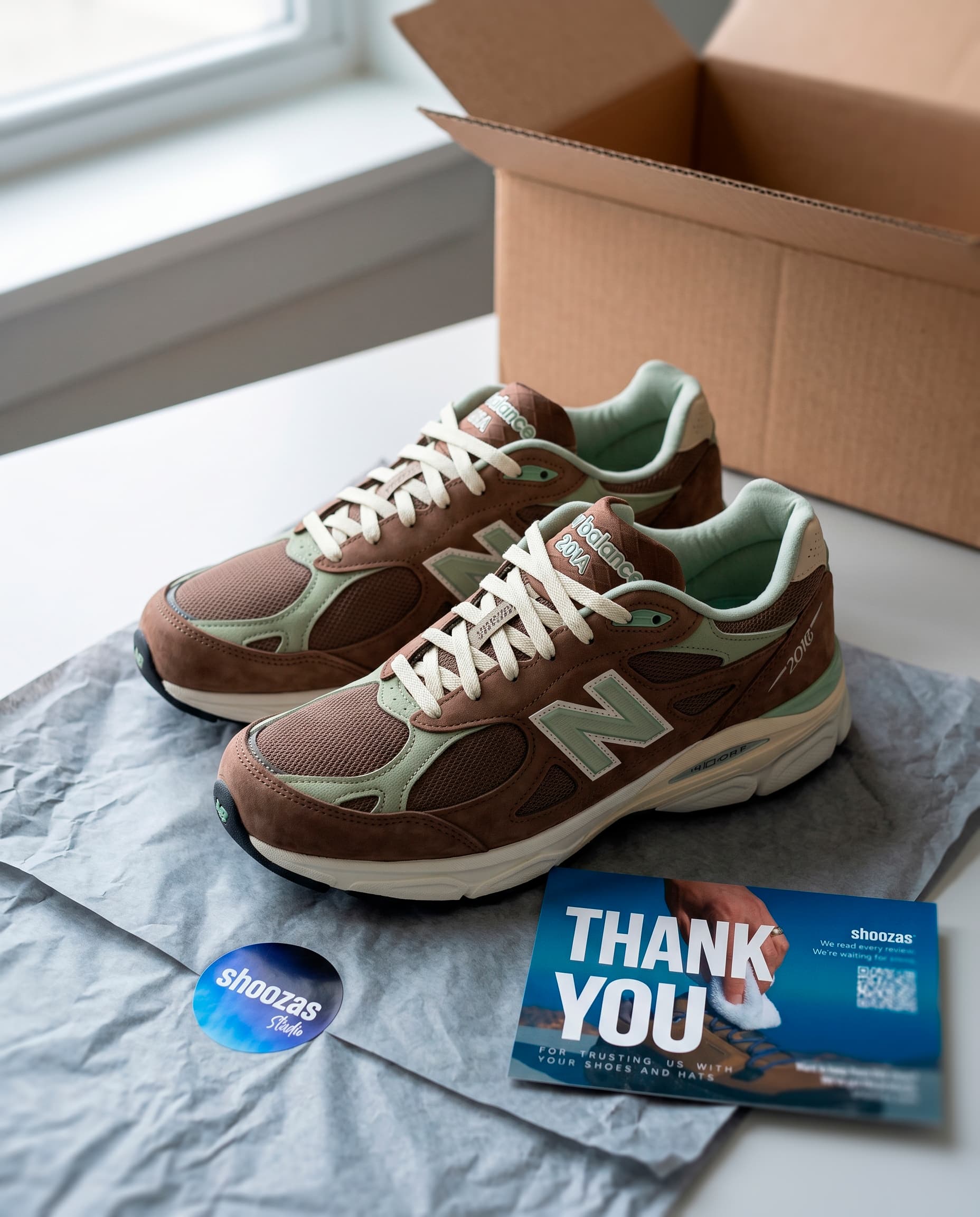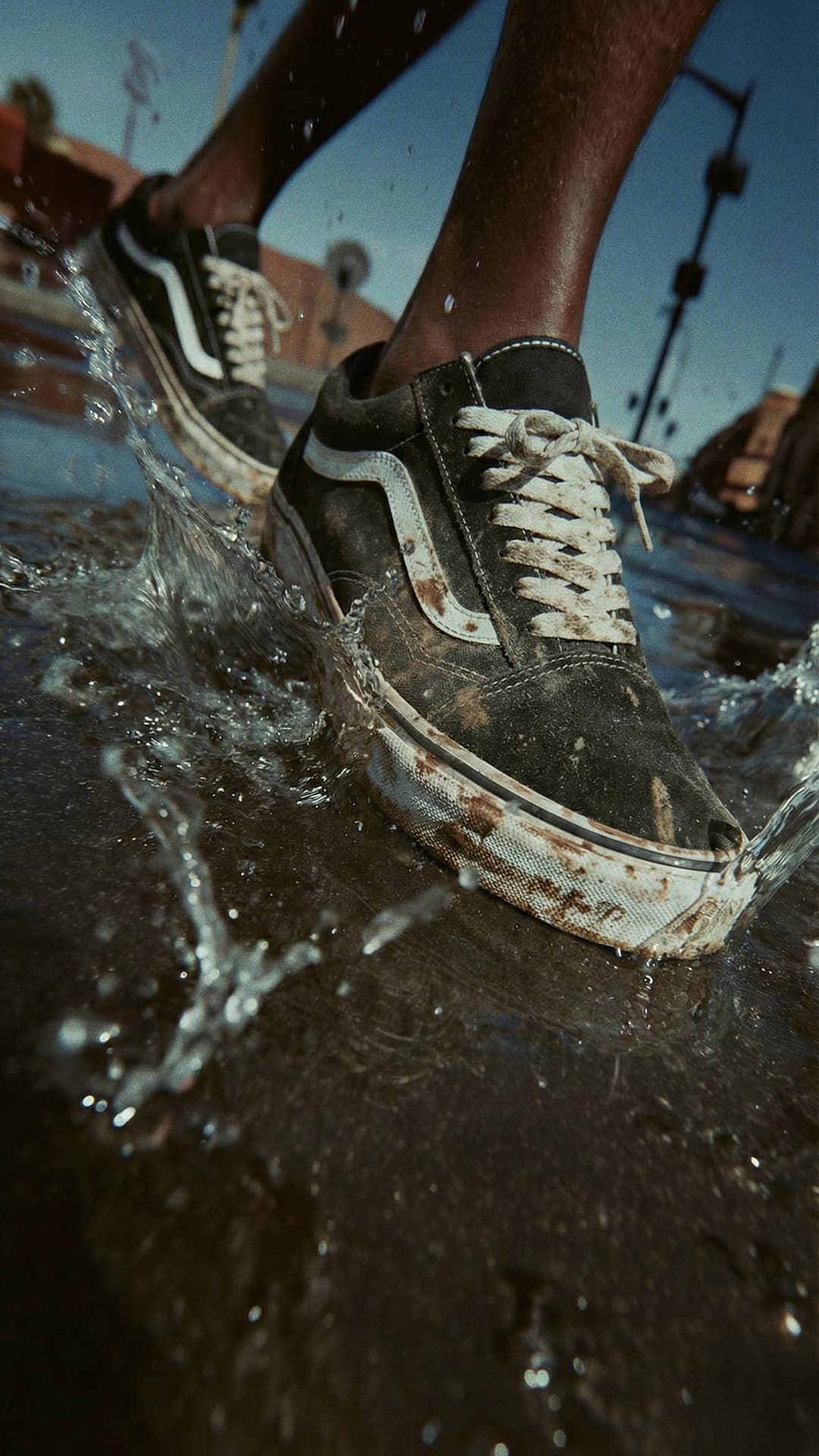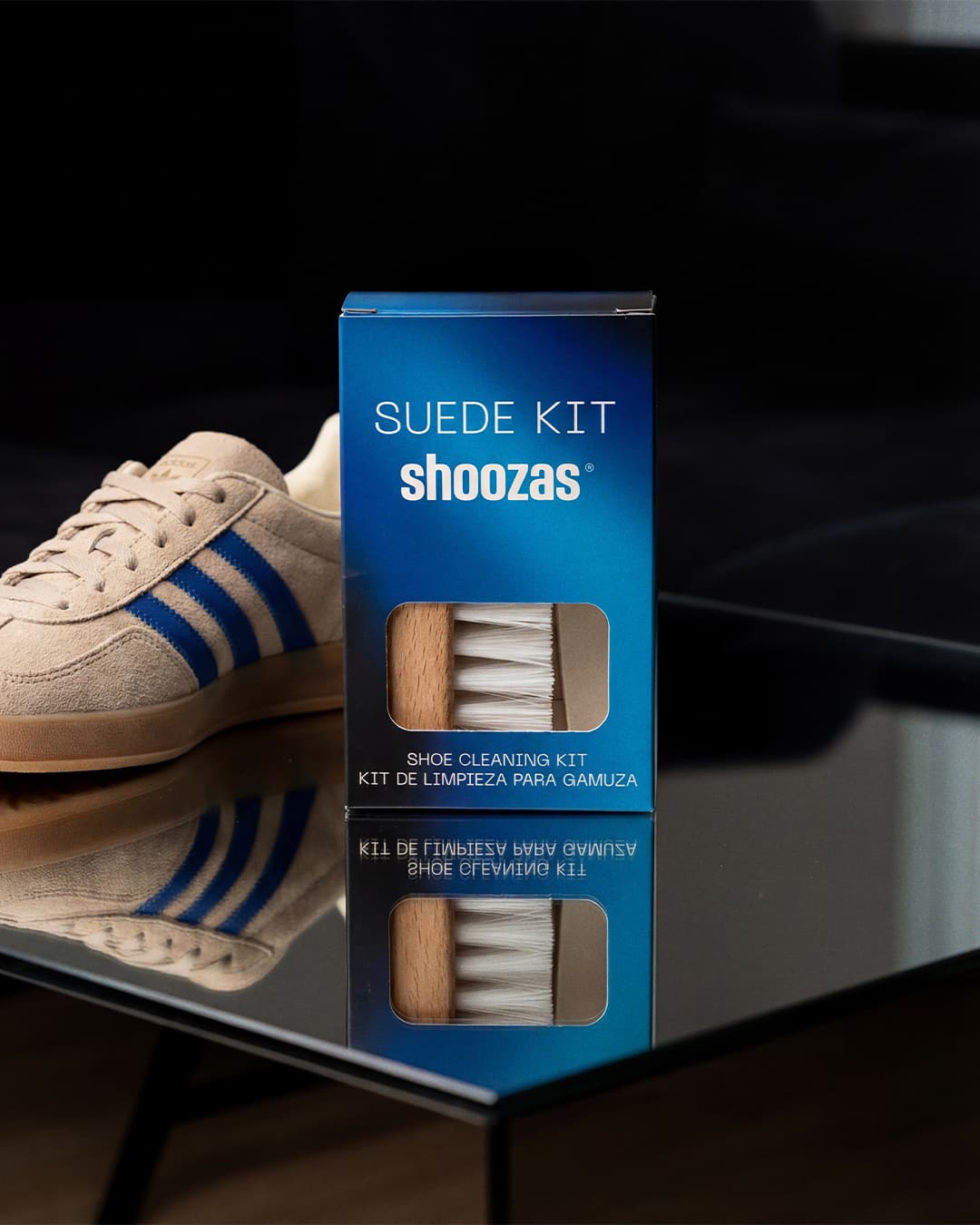
They look the same. They don't clean the same.
Most people can't tell suede from nubuck by sight alone. Both have that soft, matte texture. Both come on premium pairs — Timberlands, Ultraboosts, Air Max 90s, New Balance 574s. And both get destroyed by the same mistake: treating them like regular leather and going in with water.
If you've ever cleaned a "suede" sneaker and ended up with stiff, blotchy, matted nap — there's a good chance you were actually working with nubuck, or you used the wrong approach for whichever one it was. The materials look nearly identical. The cleaning logic is not.
What's actually different
Both suede and nubuck are made from animal hide. That's where the similarity ends.
Suede comes from the underside of the hide — the inner split. It's softer, more porous, and more delicate. That porosity is why it absorbs liquids so aggressively. A water drop on suede spreads fast and dries stiff.
Nubuck comes from the outer grain side of the hide, buffed down to create a velvet-like surface. Because it starts from the tougher outer layer, nubuck is more durable and slightly more resistant to light moisture. But it's still sensitive — and because it feels more substantial, people often over-clean it with products meant for full-grain leather.
The quick test: run your finger firmly across the surface. Nubuck has a very tight, fine nap that resists the stroke slightly. Suede has a looser, more directional pile that moves easily and visibly under your fingertip.
How we approach suede vs nubuck cleaning at Shoozas
Every pair that comes into the studio gets a material check before anything touches it. Suede and nubuck both get flagged — and they get different handling.
On both materials, we never apply liquid until the surface is brushed dry. Loose dirt and debris embedded in the nap turns into a staining paste the second moisture hits it. That single dry-brush step prevents most of the streaking we see on DIY-cleaned pairs.
On suede specifically, we work in short, directional strokes — always with the grain. Going against the nap lifts fibers unevenly and creates a patchy finish that's difficult to reverse.
Nubuck tolerates slightly more targeted moisture and a firmer hand, but it still demands restraint. We use less product than you'd expect and let each pass dry before reassessing. The grain side is tougher, but the buffed surface is still easy to overwork.
Both materials get a nap-lifting finish pass after cleaning — raising the pile so the texture looks consistent, not flat and matted.
What cleaning can and can't do
Cleaning removes surface dirt, stains, salt lines, and most food or beverage marks from suede and nubuck. Done right, it brings the nap back to a consistent, presentable texture.
What it can't do: reverse deep dye transfer from dark jeans or other materials that have bled into the fibers over time. It also can't rebuild nap that's been completely matted down by repeated machine washing or aggressive scrubbing. If a pair has been soaked in water multiple times and the fibers are damaged, we'll clean it — but we'll be honest with you about what the ceiling looks like.
Cleaning is not restoration. We don't dye, repaint, or restructure the material. But for the vast majority of pairs that come through the studio, a proper clean is all they actually needed.
Ready to stop guessing?
Suede and nubuck require patience, the right tools, and — most importantly — knowing which one you're actually holding. If you're not sure, or you just don't want to risk it on a pair you care about, send it to us. We'll identify the material, run the right process, and ship it back looking clean.